Tampilkan postingan dengan label Uganda. Tampilkan semua postingan

Rabu, 20 Maret 2013

Gender strategy of the East Africa Dairy Development project boosts women's participation in dairy organizations


The March 2013 issue of the New Agriculturist online newsletter highlights some of the approaches used by the East Africa Dairy Development (EADD) project to transform attitudes to gender so as to achieve increased participation of women in livestock development activities.

The EADD project aims at doubling household income from dairy products among 179,000 livestock-keeping households in Kenya, Uganda and Rwanda.

The project has adopted a dairy hub approach to enable farmers' have easy access to key farm inputs and animal health services as well as bulking and chilling facilities for their milk.

A baseline survey carried out in 2008 found that only 14% of dairy organization members were women. Because gender equity was a key pillar of the project, a pragmatic gender strategy was developed to incorporate gender issues into the project towards increasing women's participation.

Various gender transformative approaches were used. These included training of project staff at country and regional level, incorporation of key gender indicators in project planning and budgets for monitoring and evaluation, and training of farmer groups, particularly women, on the importance of being a member of a dairy organization.

These efforts have borne fruit, with a noted increase in women's membership in dairy organizations from 14% at the start of the project to 29% in June 2012.

The EADD project is now entering its second phase, which will see the project activities expand into Ethiopia and Tanzania.

Kamis, 20 Desember 2012

Dairy hubs for delivery of technical and advisory services: Lessons from the East Africa Dairy Development project

The vision of the East Africa Dairy Development project is to transform the lives of 179,000 smallholder farming families (approximately 1 million people) by doubling their household dairy income in 10 years.

To achieve this goal, the project seeks to harness information to support decision making and innovation, expand smallholder dairy farmers' access to markets for their milk, and increase farm productivity and economies of scale.

The project uses a hub approach to improve dairy farmers' access to business services, inputs and markets. The dairy hubs facilitate the emergence and strengthening of networks of input and service providers as well as the establishment of mechanisms for farmers to access credit.

On 5-7 December 2012, Jo Cadilhon, agricultural economist with the International Livestock Research Institute (ILRI), attended a stakeholder workshop on the role of the public and private sectors in the delivery of livestock services in Africa. He presented the concept of dairy hubs for delivery of advisory and technical services to smallholder dairy production systems, based on the experiences of the East Africa Dairy Development project.

Rabu, 25 April 2012

Feeding dairy cattle: Regional experts develop manual for farmers in East Africa


The East Africa Dairy Development project has produced a manual aimed at helping farmers in the region boost the productivity of their dairy cows through adoption of improved animal feeding practices.

The manual was developed by a team of animal science experts from the International Livestock Research Institute (ILRI), the Kenya Agricultural Research Institute (KARI) and the University of Nairobi.

The topics include the basic nutrient requirements of dairy cows; pasture management; production of forage such as hay and silage; feed supplements; practical aspects of feeding calves, heifers and dairy cows; and how to control forage diseases like Napier grass head smut.

Whereas the information has been synthesized in such a way as to be applicable to the East African region, some information may be site specific, and in some instances information that is generalized may need to be customized to suit specific areas.

The manual builds on an earlier version produced by the Smallholder Dairy Project and the Kenya Dairy Development Program that was designed to guide extension workers and smallholder dairy farmers through the basics of feeding dairy animals.

Although dairy farmers are the primary audience of the manual, it may also be a useful information resource for extension workers as well as students of animal production.

For more information, please contact ILRI feed scientist Ben Lukuyu (b.lukuyu @ cgiar.org)

Click here to download the manual


Citation
Lukuyu B, Gachuiri CK, Lukuyu MN, Lusweti C and Mwendia S (eds). 2012. Feeding dairy cattle in East Africa. East Africa Dairy Development Project, Nairobi, Kenya.

You may also be interested in:
Study identifies feed improvement options for dairy farmers in East Africa

Selasa, 27 September 2011

Study explores market opportunities for value-added beef products in East Africa

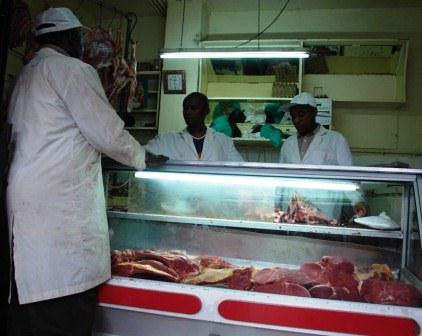
Selling meat in a Kenyan butchery. Improving the quality and safety of beef sold by small-scale traders in East Africa will enable them take advantage of emerging niche markets and increase their incomes. (Photo: ILRI)

According to a May 2011 report by the International Food Policy Research Institute (IFPRI), annual meat consumption per person will more than double in sub-Saharan Africa from 2000 to 2050, leading to a doubling of total meat consumption by 2050.

The Food and Agriculture Organization (FAO) estimates that between 1997-99 and 2030, annual meat consumption in sub-Saharan Africa (excluding South Africa) will increase from 9.4 to 13.4 kg per person.

Growth in human population, increasing incomes and changing consumer tastes are among the main drivers of this rise in demand for high-quality meat products in much of the developing world, a trend that is expected to continue.

In eastern Africa, the growing demand for high-quality meat products presents a ripe opportunity for livestock producers to take advantage of the emerging markets for value-added meat products. However, several institutional barriers, such as unfavourable policies and poorly enforced regulations, limit the extent to which small-scale meat producers and market agents in the region can benefit from these opportunities.

To address this and other related issues, a collaborative project, Exploiting market opportunities for value-added dairy and meat products in the Eastern and Central Africa region, was carried out in Ethiopia, Kenya and Tanzania in 2006 and in Rwanda, Uganda and South Sudan in 2010 to characterize value chains for conventional and niche markets for dairy and meat products.

The project aimed at enhancing the capacity of small- and medium-scale enterprises in the East Africa region to effectively meet consumer demand for safe, high-quality dairy and meat products that meet national regulatory requirements.

The study examined consumers' perspectives on meat quality and safety and found that high-income consumers prefer to buy meat from upper-end markets like priority stores and supermarkets. They associate well packaged meat, clean premises and veterinary stamped-products with good quality and safety, and are indeed willing to pay a premium for these attributes. On the other hand, low-income consumers mostly purchase their meat products from local butcheries.

Roast beef

Selling of roast beef is an increasing trend motivated by rising consumer demand for ready-to eat roast beef. For example, in Kenya, Tanzania and South Sudan, the roast meat (nyama choma) sold in butcheries and bars is a growing preference by both the indigenous and foreign consumers. In Uganda, vending of roadside roast beef known as muchomo is a growing trend on highway spots outside the capital city, Kampala.

The different ways in which the beef is roasted, dressed and sold varies by country. However, some consumers still question the safety and quality of beef as it goes through the processes of roasting, dressing and selling. However, if sellers can provide assurance of quality and safety then there will be demand from the high-income consumers.

Therefore, to increase the sales of value-added products, sellers of roast beef should adhere to national regulations for quality and safety and respond to consumer preferences. The growing trend of niche markets running along the spectrum of high, medium and low income consumers should also be explored as an opportunity for increasing sales through product value addition.

Regulators and policy perspectives

With regard to the policy and regulatory environment, the study identified a need for greater harmonization of regulations among countries in the eastern Africa region in order to enhance effective service provision to the beef sector.

The study proposes that a comprehensive beef policy for the region be drawn up to guide the implementation and enforcement of regulations aimed at ensuring the quality and safety of beef products, particularly those sold by small-scale traders.

For more information about this study, please contact Dr Amos Omore of the International Livestock Research Institute (ILRI) (a.omore @ cgiar.org).

Story adapted from a brochure, Quality and safety of small-scale beef products in East and Central Africa, produced by the Association for Strengthening Agricultural Research in Eastern and Central Africa (ASARECA).

Senin, 19 September 2011

Study examines quality and safety of East Africa's milk and dairy products

Training and certification schemes for small-scale sellers of milk and dairy products in Eastern Africa can lead to better milk quality and help traders benefit from the growing demand for value-added dairy products. (Photo: ILRI)
Most sub-Saharan countries, including those in Eastern and Central Africa, are net importers of dairy products, with most of these products being imported from Europe and South Africa. In South Sudan, nearly all value-added dairy products are imported. At the same time, there is a growing demand for high-quality dairy products by the growing population and the tourist market.

The unmet demand is providing opportunities for value addition. However, significant technical and institutional barriers continue to limit the exploitation of these benefits by small-scale producers and small- and medium-scale enterprises engaged in value addition activities.

A study characterizing value chains for both conventional and niche markets for dairy and meat products was carried out in Ethiopia, Kenya and Tanzania in 2006 and in Rwanda, Uganda and South Sudan in 2010.

The main objective of the project, Exploiting market opportunities for value-added dairy and meat products in the Eastern and Central Africa region, was to enhance the capacity of small- and medium-scale enterprises to meet demand for quality and safety of the various value chain actors and regulatory requirements.

Major concerns and opportunities for value addition are presented here to stimulate action by producers, processors and traders on key issues regarding the quality and safety of milk and dairy products produced and marketed by small and medium enterprises in the eastern Africa region.

Consumer perceptions 

The issue of milk quality evokes different perceptions and reactions among different categories of consumers. Over 80% of the milk is sold raw (unpasteurized). Colour, smell, thickness, perceived fat content and cleanliness of the milk handlers, milk vessels and premises from where milk is sold are some of the most important criteria used by those purchasing raw milk.

Adulteration of milk, often judged by observations on thickness and physical appearance, is a major food safety concern to consumers, counter-balanced only by personal judgment and mutual trust between buyer and seller. Most adults consume fresh milk in the form of tea or makyato (Ethiopia) while children drink fresh milk directly after boiling.

The quality of packaging, presence of quality certification mark, expiry date and reliability of supplier are very important considerations to consumers who buy value-added dairy products such as pasteurized milk, yoghurt, fermented (sour) milk, cheese and butter.

More than 50% of consumers interviewed considered the quality of packaging to be an important measure of the quality and safety of products they bought and would be willing to pay more for well-packaged milk. This is not surprising as most of them were already purchasing considerably more expensive but better packaged imported dairy products.

Between the milk producers and consumers, various market intermediaries including informal milk traders, vendors, hawkers and formal dairy chain actors such as co-operative societies and processors play various roles in transforming milk into value-added products.

All processors consider milk producers as their primary clients. The primary concern of the informal traders is the quantity of milk supplied to them which can vary a lot by season, especially where traditional pastoralists are the major suppliers. Adulteration with water is a common problem especially in the dry season.

Milk quality

The main concern of the organized sector in all the six countries is the quality and hygienic level of milk handling. The use of plastic vessels for carrying milk is a major source of contamination as they are often poorly designed, not made of food-grade material and difficult to clean.

Most processors use lactometers to exclude heavily adulterated milk with a common lactometer reading cut-off point of 26. Seasonal fluctuation in the quantity, quality and prices of raw milk is yet another area of concern for processors.

Large hotels and supermarkets often demand quality and safety for value added products that are properly and attractively packaged and are endorsed by quality control bodies such as national bureaus of standards. Some high-end supermarkets demand packaged products to have bar codes for ease of sales and stock control.

Very few small- and medium-scale enterprises meet these demands for quality and safety. In some cases, there were poorly designed or inappropriately, inadequately, or erroneously labelled containers and wrappings of butter and cheese.

These shortcomings have tended to degrade the quality and safety perception of such products by potential buyers or, more importantly, acted as barriers to accessing high-end supermarket shelves in some of the major cities of the six countries.

All countries have food standards bodies and regulations that prescribe hygienic and food safety standards for milk and dairy products. Nevertheless, informal trade in raw milk is predominant in all countries and compliance by small- and medium-scale enterprises is still low.

High fees for quality testing and certification; lack of quality control facilities; the high cost of packaging materials; high cost of appropriate milk handling equipment such as milk cans and milk coolers; and lack of appropriate knowledge and skills were cited as major barriers.

Actions to address some of these constraints could include training and offering group concessions in quality certification schemes.

For more information about this study, please contact Dr Amos Omore of the International Livestock Research Institute (ILRI) (a.omore @ cgiar.org).

Story adapted from a brochure, Quality and safety of value added milk and dairy products, produced by the Association for Strengthening Agricultural Research in Eastern and Central Africa (ASARECA).

You may also be interested in these earlier blog posts on Livestock Markets Digest:

Senin, 11 Juli 2011

East Africa dairy experts seek harmonized standards to promote regional trade


Dairy experts in East Africa are working towards harmonization of dairy policies and standards in a bid to promote regional trade in milk and dairy products and enhance access to markets.

In line with this objective, representatives from the East African Community (EAC) Secretariat and the East Africa Dairy Regulatory Authorities Council (EADRAC) met in Arusha, Tanzania on 6-7 July 2011 to review progress made in harmonization of regional dairy policies and standards.

EADRAC is a forum that comprises chairpersons, chief executives and key technical staff of national dairy boards and regulatory authorities from five EAC member countries, namely, Burundi, Kenya, Rwanda, Tanzania and Uganda.

EADRAC was formed in 2006 to work towards harmonization of dairy policies and standards in the region as well as foster the sharing of lessons among countries.

The Association for Strengthening Agricultural Research in Eastern and Central Africa (ASARECA) and the International Livestock Research Institute (ILRI) have been working in partnership with EADRAC to provide the research evidence needed to inform and guide the policy actions by the dairy regulatory authorities.

The two-day meeting was organized by ASARECA, ILRI and the EAC Secretariat.

The participants discussed trends in intra-regional trade in dairy products, reduction of tariff and non-tariff barriers across regional borders, and the implications of the recently revised Codex Alimentarius clause on the use of the lactoperoxidase system (LPS) in preservation of raw milk.

ILRI was represented at the meeting by two scientists from the Market Opportunities Theme, veterinary epidemiologist, Dr Amos Omore and agricultural economist, Dr Ayele Gelan.

ILRI shared evidence from recent commissioned research work on the impacts of changing tariff and non-tariff barriers on regional dairy trade, and on the use of LPS in milk preservation, which the forum thought needed wider consultations including a revision of the relevant regional dairy standards before piloting of the system.

EADRAC meetings are held about annually, with the last one held in early December 2009 at ILRI's Nairobi headquarters, back-to-back with a South-South Dairy Symposium involving dairy researchers and policymakers from East Africa and Northeast India.

India is currently the world's largest milk producer and, as in East Africa, the traditional dairy sector dominates the marketing of milk.

The forum proposed a conference in June 2012 in Kampala, Uganda to bring together a wider group of regional stakeholders including, EADRAC, ASARECA, ILRI and the East Africa Agricultural Productivity Programme to review progress made and new actions required towards further harmonization of dairy policies in the region.

"EADRAC is positioning itself to be the main technical agency for addressing non-tariff barriers to trade in East Africa once it is recognized as such by the EAC Secretariat, and memorandum of understanding detailing this relationship is under consideration" said Dr Omore.

Related links: 
EAC official seeks transformation of regional dairy sector (Daily Nation, 7 July 2011)

Symposium develops policy to transform traditional dairy markets in East Africa and Northeast India (Livestock Markets Digest, 15 December 2009)

CEOs of East African dairy boards endorse harmonized milk training curricula for informal traders (Livestock Markets Digest, 17 February 2006)

Kamis, 21 April 2011

Livestock data innovation project works to improve quality of livestock data in Africa


The Livestock Data Innovation in Africa project is a three-year (2010–2012) project that works with national governments and institutes to pilot and develop methodologies to identify, collect and analyze livestock data in three pilot countries: Niger, Tanzania and Uganda.

Among other objectives, the project seeks to establish and maintain communication networks between the suppliers and users of livestock data so that a core set of key livestock indicators and their associated data can be identified, regularly collected and shared in order to support targeted pro-poor investment and policy formulation.

The project is sponsored by the Bill & Melinda Gates Foundation and jointly implemented by the World Bank, the International Livestock Research Institute (ILRI) and the United Nations Food and Agriculture Organization (FAO), in collaboration with the African Union - Interafrican Bureau for Animal Resources (AU-IBAR).

For more information, please visit http://www.africalivestockdata.org.

Jumat, 15 April 2011

East Africa's small dairy farmers and traders to benefit from training manuals in Kiswahili


"Hygienic milk production: A training guide for farm-level workers and milk handlers in Eastern Africa." One of six training manuals in Kiswahili for dairy farmers and informal milk traders in Kenya and Tanzania 

The East Africa Dairy Development project, through the Market Opportunities Theme of the International Livestock Research Institute (ILRI), has supported the re-packaging of training manuals for small dairy farmers and traders by translating the documents into local languages to enhance uptake and use.

In February 2006, the chief executives of dairy boards in Kenya, Rwanda, Tanzania and Uganda endorsed harmonized generic training manuals that were developed for training of small-scale dairy farmers and informal milk traders, transporters and processors in eastern Africa.

The manuals were based on common minimum standards needed for hygienic handling of milk and dairy products and form the basis of a certification and licensing scheme for the region's small-scale traders that will enable them to sell their milk freely across borders.

More recently, the Tanzania Dairy Board commissioned the translation of the manuals from the original English into Kiswahili. The Kiswahili versions are now available.

Moduli 1 - Uzalishaji bora wa maziwa: Mwongozo wa kufundishia wafugaji na wahudumu wa maziwa Afrika Mashariki

Moduli 2 - Njia bora za ukusanyaji na upimaji maziwa: Mwongozo wa kufundishia wahudumu wa vituo vya kukusanyia maziwa Afrika Mashariki

Moduli 3 - Utunzaji, uhifadhi na usafirishaji bora wa maziwa: Mwongozo wa kufundishia wasafirishaji wa maziwa Afrika Mashariki

Moduli 4 - Biashara ya maziwa bora: Mwongozo wa kufundishia wafanyabiashara wa maziwa Afrika Mashariki

Moduli 5 - Usindikaji bora wa maziwa: Mwongozo wa kufundishia wasindikaji wadogo wa maziwa Afrika Mashariki

Moduli 6 - Misingi ya uendeshaji biashara ya maziwa na masoko: Mwongozo wa kufundishia wafugaji, wafanyabiashara, wasafi rishaji na wasindikaji wa maziwa Afrika Mashariki

For more information, contact Dr Amos Omore, a.omore [at] cgiar.org

Senin, 08 November 2010

Tool for management of Ankole cattle presented at meeting of international livestock experts

A body condition scoring system developed for Uganda's native Ankole cattle was presented during the 5th All Africa Conference on Animal Agriculture held in Addis Ababa, Ethiopia on 25-28 October 2010.

The standardized body condition scoring system was featured in a poster by Dr Ellen Dierenfeld, Senior Manager, Africa R&D and Manager, Sustainability Programs Research at Novus International, and  Dr Ben Lukuyu, an animal feed scientist with ILRI's Market Opportunities Theme.

Novus International, a global developer of animal health and nutrition programs, is partnering with ILRI and others in the East Africa Dairy Development project being undertaken in Kenya, Rwanda and Uganda.

Body condition of dairy cattle affects their feeding efficiency, milk production and reproductive performance. For this reason, the scoring of body condition is an important management tool that can greatly assist livestock farmers to better manage their herds, especially at critical life stages such as early lactation and calving.

The body scoring system for Ankole cattle was developed based on information obtained from farmer interviews, literature reviews and body condition charts developed for other breeds. Based on feedback and inputs from farmers, the system will be refined in future, if needed.

Citation:
Dierenfeld ES and Lukuyu B. 2010. Development of a standardized body condition score for native cattle in Uganda. Poster presented at the 5th All Africa Conference on Animal Agriculture and the 18th Annual Meeting of the Ethiopian Society of Animal Production (ESAP), Addis Ababa, Ethiopia, 25-28 October 2010.

Kamis, 08 Juli 2010

Are smallholder dairy farmers in East Africa competitive?

Small-scale dairy farms dominate production in most developing countries, including in East Africa. In the light of rapidly increasing demand for milk in most of the developing world, one important question is: can small-scale dairy farmers compete in the international arena? Also, what factors influence their competitiveness?

These questions were explored recently during a presentation by ILRI agricultural economist, Dr Isabelle Baltenweck, at the 6th Africa Dairy Conference and Exhibition held in Kigali, Rwanda on 18-20 May 2010.

The presentation was based on research findings from the East Africa Dairy Development project which quantified farm-gate milk prices and costs of milk production in study sites in Kenya, Rwanda and Uganda.

The findings indicate that smallholder dairy producers in East Africa can effectively compete, mainly due to strong local demand. This can be further enhanced by improving economies of scale; enhancing access to inputs, services and appropriate technologies; improving infrastructure; and creating an enabling policy and institutional environment.

Senin, 24 Mei 2010

Counting the losses: Regional project quantifies milk spoilage in East Africa

A regional dairy industry development project is generating research data to quantify the levels of milk losses due to spoilage in East Africa. The East Africa Dairy Development project (EADD) is involved in research to assess the levels and causes of milk spoilage experienced by informal milk traders in Kenya, Rwanda and Uganda. The analysis of the data collected will be used as an empirical basis for interventions aimed at reducing losses and improving milk quality in the informal dairy sector of the respective countries.

Preliminary results show that over 75% of traders sourcing milk from farmers report milk loss due to spoilage, and those losing milk report losses of between 17 and 23 litres per week due to spoilage, occasioned largely by unhygienic milk handling and inadequate milk cooling systems. Other causes of milk spoilage include adulteration and mixing of evening and morning milk. Factors that exacerbate the problem are delayed milk delivery, erratic electricity supply at milk cooling plants and low levels of training on hygienic milk handling among traders. Data analysis is ongoing to evaluate the losses in income experienced by farmers and informal milk traders as a result of milk spoilage.

The data generated by EADD builds on findings from an earlier study by the Food and Agriculture Organization of the United Nations (FAO) in 2003-04. At the time, the problem of milk losses had long been acknowledged to exist in Eastern Africa. However, there was a gap in knowledge with regard to the quantities of milk lost along the producer-to-consumer supply chain. To fill this gap, FAO led rapid appraisal studies aimed at quantifying post-harvest milk and dairy product losses in Eastern Africa and the Near East.

The studies carried out in Ethiopia, Kenya, Syria, Tanzania and Uganda represented the first-ever systematic attempt to accurately quantify milk losses in these countries. The country reports formed the basis of two synthesis reports prepared by the International Livestock Research Institute (ILRI) that identified the types, levels and causes of milk losses, both in terms of quantity and monetary value. Specific links in the milk supply chain where significant losses were experienced were also identified. Losses with pragmatic solutions were identified and targeted for appropriate interventions aimed at reducing or eliminating the losses.

In Eastern Africa, the small-scale informal dairy sector was found to bear the brunt of post-harvest milk losses; formal milk processors incurred minimal losses. In terms of quantity, significant milk losses were found to occur at the farm level (8.4, 28.6, 46.4 and 54.2 million litres of milk per year for Uganda, Ethiopia, Tanzania and Kenya, respectively) valued at between 0.9 and 11 million US dollars.


Post-harvest losses of milk at the farm represented 1.3 to 6.4 percent of the value of available milk at the farm level. The total value of post-harvest milk losses per year amounted to 9.9, 14.2, 17.8 and 23.9 million US dollars for Tanzania, Ethiopia, Kenya and Uganda, respectively.

Poor road infrastructure and inadequate markets for raw milk were the main causes of farm-level losses, which were found to be largely in form of spoilage, spillage and “forced home consumption” (including by calves and humans) over and above normal household consumption. Although in quantity terms forced losses may seem to be high, in value terms they are less significant, because an estimated 70% of the value of the milk is still captured. Along the marketing chain, milk loss was mainly due to spillage and spoilage. These losses were occasioned by poor access to markets, poor milk handling practices and irregular power supply in milk processing plants.

EADD has identified the lack of training in milk hygiene as an opportunity to improve the quality of milk sold by the informal dairy sector through implementation of a quality assurance scheme that incorporates training and certification of traders. The project is also assisting farmers to own chilling plants through Dairy Farmers Business Associations to reduce the losses and increase marketed output.

EADD is implemented by Heifer International in partnership with African Breeders Service Total Cattle Management (ABS-TCM), ILRI, TechnoServe and the World Agroforestry Centre (ICRAF). Funded by the Bill & Melinda Gates Foundation, the goal of this project is to help one million people – 179,000 families living on small 1-5 acre farms – lift themselves out of poverty through more profitable production and marketing of milk.

For more information about EADD, please visit the project website http://www.heifer.org/eadd.

This article was written by Tezira Lore with input from Amos Omore

Senin, 14 Desember 2009

Symposium develops policy to transform traditional milk markets in East Africa & Northeast India


Participants at the South-South dairy symposium held at ILRI Nairobi, 1-4 December 2009
PHOTO/Tezira Lore (ILRI)

Between 1 and 4 December 2009, some 25 dairy-sector stakeholders from Kenya, Uganda, Tanzania and Northeast India met at ILRI Nairobi for a South-South symposium to share lessons on traditional dairy development.

The symposium -- Opportunities for transforming the informal sector in emerging dairy markets -- brought together representatives from dairy regulatory authorities, research organizations and development NGOs.

India is currently the world's largest dairy producer and in Kenya, dairy is the largest agricultural sub-sector by contribution to GDP. In both India and East Africa, 70-90% of all milk sold is handled by the informal, traditional dairy sector which is also an important source of employment and nutrition.

During the symposium, case study presentations were made and discussions held under five themes:
  • The importance of the informal dairy sector and quality and safety challenges
  • Training and certification to improve milk quality and business performance
  • Innovation in products and developing dairy markets
  • Informal sector governance, different models for dairy boards and enabling policy environments
  • Barriers to transformation of the informal sector and investments for value addition
At the close of the meeting, the following key policy recommendations were put forward to guide dairy regulatory authorities and policymakers in the participating countries in their quest to transform and improve their traditional milk markets.
  • Best evidence suggests the informal sector will continue to co-exist for the foreseeable future. There is need for enabling policy to help facilitate the ongoing transformation and modernization of the traditional sector and to build stronger synergies with the formal sector.
  • There are concerns about public health and consumer safety and a real need to address these. Training and certification has proven a highly successful model for improving milk quality in East Africa, and this innovation shows promise for other southern countries.
  • Moving to quality-based payments provides a strong incentive for improving the quality and safety of milk has been successfully trialed in India and should be encouraged in East Africa.
  • As a long-term objective, harmonization of standards is required. In the short term, continued benchmarking between East Africa and South Asia can benefit both regions.
  • Dairy sector governance is complex with multiple agents and overlapping mandates. There is a need to co-ordinate agencies; a 'one-stop shop' for all dairy stakeholders would be the ideal model.
The symposium was organized by ILRI and the Association for Strengthening Agricultural Research in Eastern and Central Africa (ASARECA), through the support of various donors including the United States Agency for International Development (USAID), the UK Department for International Development (DFID) and the European Union.

EDIT UPDATE: To view the presentations and find out more about the symposium's outcomes, please visit the website https://sites.google.com/a/cgxchange.org/southsouthdairysymposium2009/

Kamis, 29 Oktober 2009

South-South symposium planned for dairy researchers and decision-makers from India and East Africa


The International Livestock Research Institute (ILRI) and the Association for Strengthening Agricultural Research in Eastern and Central Africa (ASARECA) will hold a four-day symposium for key dairy researchers and decision-makers from East Africa and Northeast India.

The symposium -- Opportunities for transforming the informal sector in emerging dairy markets -- is provisionally planned for 1 to 4 December 2009 in Nairobi, Kenya.

In both India and East Africa, the informal dairy sector handles 80-90% of marketed milk. India currently holds the distinction of being home to the world’s largest dairy industry.

In both these regions, the informal dairy sector is a major source of employment and offers a low-cost, nutritive product to poor consumers who cannot afford to buy formally processed, pasteurized milk.

Innovative approaches towards upgrading the informal dairy sector continue to be explored, with a view to improving the quality and safety of milk sold.

Case studies on key issues facing the informal dairy sector – including governance, quality assurance and value addition – will be presented and specific strategies and recommendations developed.

For more information, please contact

Amos Omore of ILRI
Email: a.omore [at] cgiar.org
Tel: +254 20 422 3403

or download the symposium prospectus (159 KB, PDF)

Senin, 22 Juni 2009

CEO of Bill and Melinda Gates Foundation lauds work by ILRI and partners in East Africa

In his first annual letter as Chief Executive Officer of the Bill & Melinda Gates Foundation, Jeff Raikes gives special mention to the East Africa Dairy Development Project which is opening up new market opportunities for small-scale dairy farmers through the setting up of milk chilling plants that also serve as hubs for access to vital inputs and financial services.

Jeff Raikes says,

"...In March, I traveled to Kenya and Zambia to see some of that work. One of the sites I visited was a milk chilling plant in the Kenyan town of Ol Kalou. The plant, which is part of a project with Heifer International, gives almost 3,000 dairy farmers the ability to chill their milk so that it won’t spoil before it is transported to a processing plant. This facility opens up a whole new market opportunity for them.

I was impressed by the chilling facility, but what really struck me were all the additional services attached to it. The plant had become a central hub where dairy farmers in a radius of 50 kilometers could get access to financial services, buy feed, and seek veterinary care for their cattle.

This is one kind of investment foundations are well-suited to make. At some point, these agricultural hubs may be profitable. In that event, they will draw interest from the private sector. But businesses won’t take that risk unless somebody provides more evidence that the business model works. I am optimistic that our project with Heifer International will do just that, while helping thousands of farmers escape poverty and hunger...."
The East Africa Dairy Development project is funded by the Bill & Melinda Gates Foundation and led by Heifer International in partnership with ILRI, TechnoServe, the World Agroforestry Centre (ICRAF) and the African Breeders Services Total Cattle Management (ABS-TCM).

Senin, 25 Agustus 2008

ILRI research report: Dairy farming in Uganda

Results of an in-depth characterization study of the Uganda dairy sector have been published in a 2007 ILRI research report titled Dairy farming in Uganda: Production efficiency and soil nutrients under different farming systems.

The study revealed that dairy farming in Uganda is profitable, regardless of the level of intensification, so a highly intensified system like zero-grazing is not always the best option.

Additionally, poor soil quality was found to be a problem in mixed crop-dairy farms under all dairy farming systems, despite availability of adequate amounts of on-farm manure. Shortage of labour may be one reason why manure is underused.

More research is needed into the economics and practicability of manure application and how to integrate it with other farm activities that compete for available labour.


Citation:
Baltenweck I, Mubiru S, Nanyeenya W, Njoroge L, Halberg N, Romney D and Staal S. 2007. Dairy farming in Uganda: Production efficiency and soil nutrients under different farming systems. ILRI Research Report 1. ILRI (International Livestock Research Institute), Nairobi, Kenya. 26pp.
Download the PDF version (570 KB)

Kamis, 08 Mei 2008

New dairy project to improve livelihoods of one million people in East Africa


A USD 42.8 million project aimed at lifting one million people in East Africa out of poverty was launched in Nairobi in May 2008.

Funded by a grant from the Bill & Melinda Gates Foundation to Heifer International, the East Africa Dairy Development (EADD) project aims to help 179,000 families – or one million people – double their incomes by increasing production of high-quality raw milk for sale to commercial dairies.

The EADD project will develop 30 milk collection hubs with cooling facilities where dairy farmers will bring raw milk for collection by commercial dairies. It will particularly target women for inclusion in both the benefits of the project and its leadership.

The four-year project (2008–2012) will be implemented in selected districts in Kenya, Rwanda and Uganda. Heifer International will manage the project with two partner organizations, TechnoServe and the International Livestock Research Institute (ILRI).

Other collaborators are the World Agroforestry Centre (ICRAF) and the African Breeders Services Total Cattle Management (ABS-TCM). ICRAF will provide farmers with improved feeding strategies to increase milk productivity while ABS will provide farmers with artificial insemination services and assist in milk testing activities.

For more about information, please visit the project website.

Jumat, 28 April 2006

Stakeholders discuss results of research on Uganda smallholder dairying

Results from a 2001–2005 indepth study of smallholder dairy farming in Uganda were presented and discussed at two stakeholder workshops held on 25–26 April 2006 in Kampala, Uganda.

The main aim of the study was to improve the contribution of smallholder dairying to the sustainable livelihoods of resource-poor farmers in Uganda through a better understanding of dairy production systems.

The presentations given at the workshops, including main results, discussions and recommendations are available at the project website http://www.ugandadairy.dk/.

Selected stakeholder reactions to the project's results

Some development organizations promote the intensification of dairy farming irrespective of circumstances, but it is not always appropriate. 'Send a cow' initiatives are not always good. So this study is very useful to make people understand these issues. Peter Lusembo, Mukono ARDC

Based on this study, we should be cautious to not always promote one specific type of dairy farming. We need to build scenarios that incorporate market, resources and recommend specific feeding systems, based on individual circumstances. The economists should present more results for different conditions. David Balikowa, Dairy Development Authority

Farmers normally do what is right for them so we should be careful about what to do. We need to help them to adapt to their challenges under changing conditions. So recommendations of anything new should build on a better understanding of why farmers choose that system. Rilla Norslund, ASPS, DANIDA

Zero-grazing may be profitable but should not be encouraged everywhere—for NGOs dealing with this, they need to go back and reconsider their strategies. We should find ways to encourage manure use, what incentives should be given? Organic farming promoted may be? If different farms have different challenges, we can use this LP model to give customized advice to the farmers, through the informed extension officers. Cyprian Ebong, NAARI, NARO

We need to simplify these findings to disseminate the information to a wide range of stakeholders, showing positive and negative aspects. Extension agents, NGOs and communities should be informed as they are the ones who need the information. Peter Lusembo